Open account
Open accountLog In
Open account

Oct 30, 2025

Basics

Benefits of Forex Trading: Advantages and Profit Potential

In this article
Benefits of Forex Trading

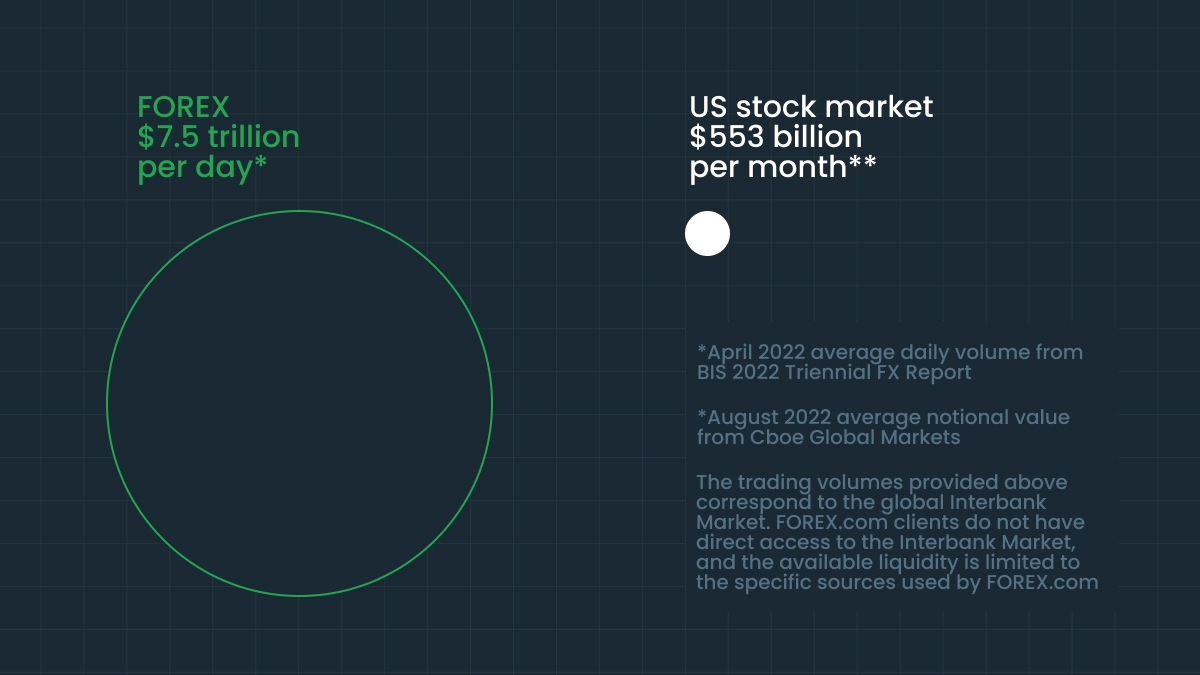
Forex trading continues to attract millions of traders around the world. Every day, around $7.5 trillion moves through the Forex market, and for good reason! As the largest financial market, it plays a central role in global commerce.

In this article, you’ll get a clear view of the key benefits of trading Forex, what makes this market unique, how it compares to others, and why so many traders choose it every day.

Risk reminder

Before we talk about the benefits, let’s stop for a moment and look at the risk. In Forex, leverage lets you control big trades with only a small amount of money. The problem is, it multiplies both profits and losses. A winning trade can grow your account fast, but a losing one can wipe it out just as quickly. Smart traders always set a stop-loss, keep their trade sizes small, and never risk money they can’t afford to lose.

Core benefits of trading Forex

Forex is where people and companies exchange money from different countries. For example, when someone sends money abroad, when a business pays for products from another country or when people invest internationally, it all happens through the Forex (foreign exchange) market.

This market has become a favorite for traders of all sizes. People like it because:

  • Getting started is easy. You can begin with any amount of money.

  • Most brokers don’t charge extra fees, so it’s a low-cost market. They earn from the small difference between the buy and sell price (spread). It depends on the broker and account type, but FBS doesn’t charge any commissions.

  • It works no matter your budget. Whether you have $100 or $1 million, the strategy can stay the same.

  • Trading is simple to follow. You always trade in currency pairs, like buying euros and selling dollars. You can earn money when prices go up or down.

Key terms every beginner should know

  • Pip: In most currency pairs, a pip is the smallest price change. It usually shows up in the fourth decimal place — for example, if EURUSD moves from 1.1000 to 1.1001, that’s one pip.

  • Lot: A standard lot equals 100 000 units of the base currency. If you're starting with a small account, mini lots (0.1) and micro lots (0.01) are useful because they allow you to place smaller trades.

  • Spread: The difference between bid and ask price. It’s built into the price and depends on the pair, broker, and market conditions.

  • Margin: When you use leverage, your broker holds a portion of your funds as margin. It’s like a deposit that backs up the size of your trade.

  • Base / Quote: Every Forex pair has two parts. The base currency comes first (like EUR in EURUSD), and the quote currency comes second (USD). The price tells you how much of the quote you need to get one unit of the base.
Prices in Forex react to real-world events such as interest rate decisions, inflation numbers, job reports, and so on.

How much does it actually cost to trade Forex?

How much does it actually cost to trade Forex?

People often say Forex is “low cost” or even “commission free.” And in some cases, that’s true, but there are still costs to be aware of.

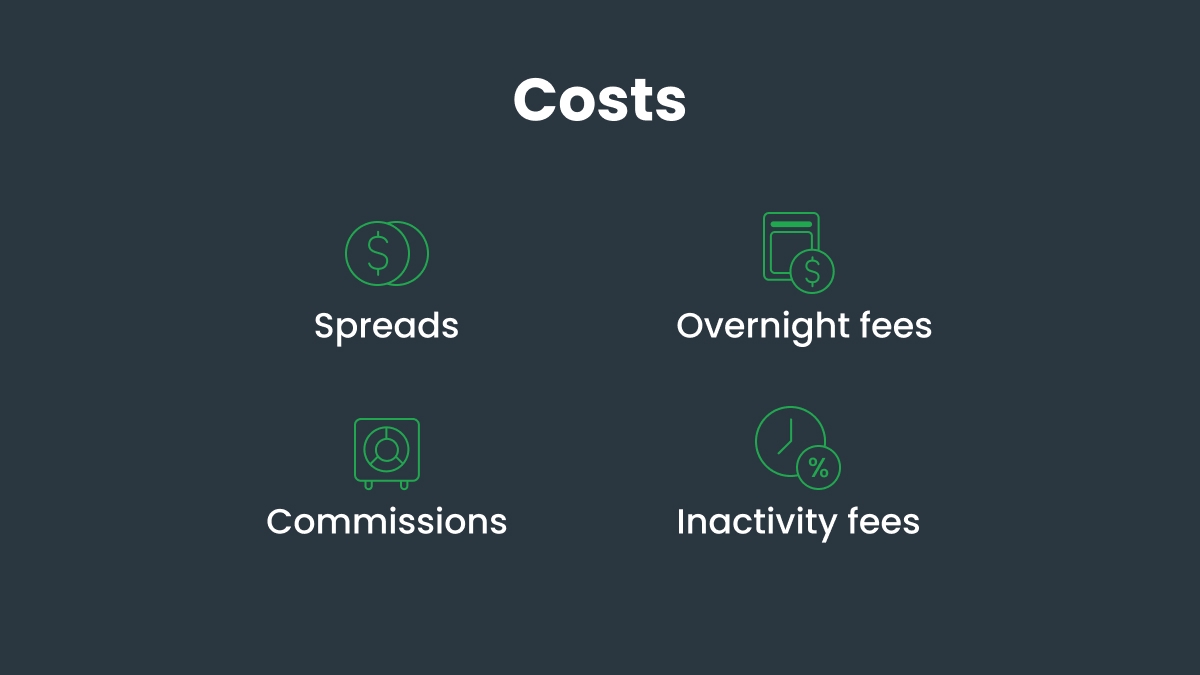
  • Spreads: This is the most common one. It’s the gap between the bid and ask price. The tighter the spread, the cheaper your trade. But spreads aren’t always stable — they can widen during major news events or when the market slows down.

  • Commissions: Some brokers don’t include their full fee in the spread. Instead, they charge a small commission per lot traded.

  • Swap / Overnight fees: If you keep a trade open overnight, you might either pay or earn a small interest adjustment. This depends on the interest rate difference between the two currencies in the pair.

  • Slippage: Sometimes, your trade doesn’t get filled at the price you wanted. This is especially common in fast markets. You might end up with a slightly worse entry, which adds to your cost.

  • Other fees: These vary by broker. Some charge for things like deposits, withdrawals, or even inactivity if you don’t trade for a while.

Getting familiar with these fees early on helps you make better decisions. You’ll be able to calculate your real break-even point and compare brokers more confidently.

Advantages compared to other markets

Forex stands out from markets like stocks and crypto because it’s more flexible and always active. The table below shows how Forex compares to other markets:

FeatureForexStocksCrypto
Trading hoursOpen 24 hours. Monday to Friday. Follows global time zonesOpen only during market hours (9:30 AM - 4:00 PM, NYSE)Always open, 24/7
LeverageTrade big using a small amount (up to 1:3000). In the US, max is 1:50Usually up to 1:2 or 1:5Up to 1:200, depending on the platform
LiquidityVery high. Trades happen fast, even in big amountsModerate. Depends on the company and volumeVaries. Depends on the coin
VolatilityPrices change with news and world eventsPrices change with company news and economy dataPrices are often affected by hype
Fees to tradeNo extra feesFee per tradeMost platforms charge a fee
Margin requirementsFlexible. Depends on your broker and accountHigh. More strict rulesHigh. Varies by platform
Where it’s tradedDecentralized. Traded OTC (over the counter)Centralized. Traded on official stock exchangesMostly on online platforms

24/5 market access and flexibility

Profit potential and liquidity

Liquidity is what keeps the Forex market moving. Major currency pairs like EURUSD or USDJPY are so active that trades happen almost instantly, even with large amounts.

More liquidity means lower costs, thanks to smaller spreads. When big markets like London and New York overlap, prices move more, creating great chances for fast trades.

The Forex market operates through a network of banks and electronic systems. This setup spreads liquidity across many platforms, so trades can happen smoothly without delays. There are always buyers and sellers ready to trade, allowing traders to react quickly to market changes.

Big events like job reports, inflation data, and news can cause major market movements. Forex offers deep liquidity and low costs, and you’re never stuck in a trade, you can set automatic orders to lock in profits or limit losses.

Institutional vs retail behavior in Forex

Institutional traders

They prioritize structure and timing, seek liquidity and prefer to trade during quieter times (when Asia opens or New York closes) to avoid quick price changes. They often test key price levels before important data releases, making their strategies more planned.

Retail traders

They often act on impulse, attracted to price changes, and tend to trade when major markets open (London or New York). Sometimes, they overreact to price movements, which can cause false signals.

Knowing who's on the other side can give you an advantage. Institutions aren’t trading your breakout, they're waiting for you to act too soon and get caught.

24/5 market access and flexibility

Forex is a market that fits any schedule and lifestyle. Whether you have a full-time job or trade at odd hours, Forex fits into your routine. For example:

  • Early riser? Trade during the Tokyo session.

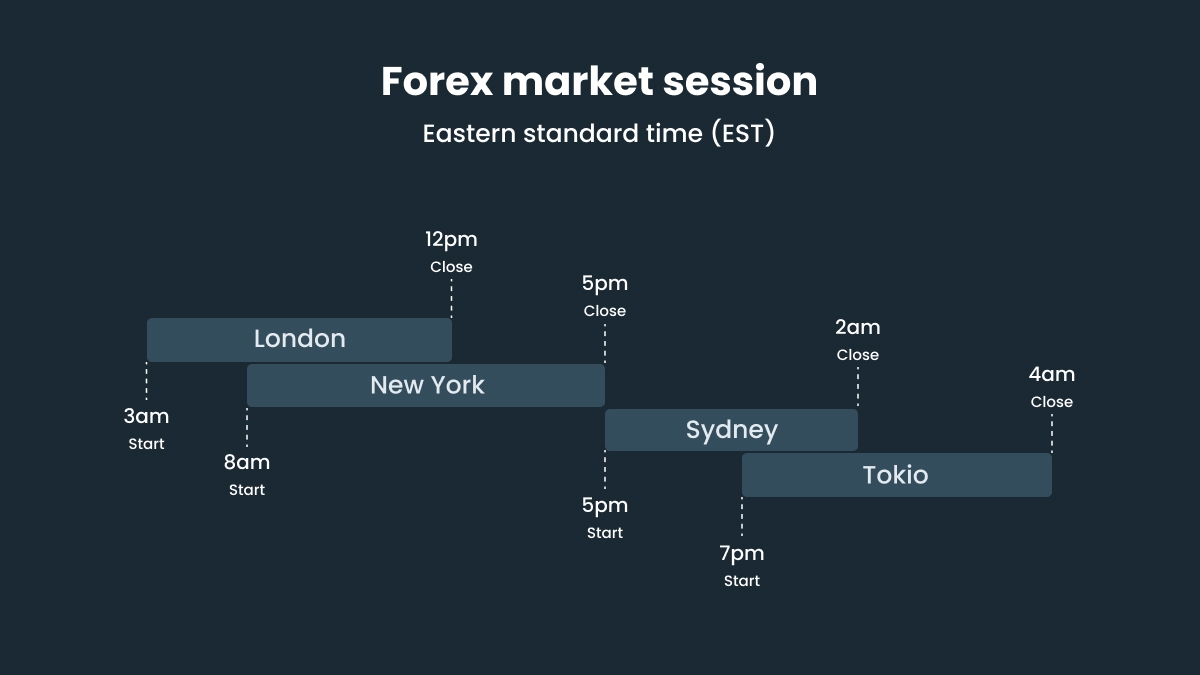
  • Want fast action? The London/New York overlap provides the most activity.

  • Limited time? Use 4-hour charts with alerts.

  • Prefer late nights? Catch the Sydney or Asian market moves.

Forex operates 24/5, from Sunday evening to Friday afternoon, so you can trade whenever you want.

The timeline below helps you see when each market is active. This makes it easier to choose the best time to trade:

Advantages compared to other markets

Forex trading hours don’t stay the same all year. Between March and April, and then between October and November, different countries adjust their clocks for daylight saving at different times. When that happens, session overlaps can shift. You might notice the London–New York overlap starting an hour earlier, or the Asian markets opening at a slightly different time, depending on where you are.

Also, watch for weekend gaps. Prices can close on Friday and re-open on Sunday at a different level, sometimes far higher or lower than the last close.

Benefits for beginners vs experienced traders

Forex trading can be great for both beginners and experienced traders, but the benefits aren’t the same. Here’s a quick look at what each group can enjoy:

For beginners

  • Easy to learn: buy and sell currencies.

  • Plenty of free courses and videos.

  • Demo accounts to practice with zero risk.

  • Start small with micro lots.

For experienced traders

  • Fast execution and automated strategies.

  • Trade larger amounts with high precision.

  • Plan trades around events. Pros watch for things like rate or inflation updates.

  • Use hedging and combine with other markets.

Hedging

You can use hedging to manage risk. One way is by taking opposite positions in pairs that usually move together. For example, you might short EURUSD and go long on GBPUSD. When those pairs are closely linked, a loss on one side can be reduced by gains on the other. But correlations aren’t fixed. They can change. Big news, interest rate moves, and market stress can cause pairs to drift apart. So keep checking how the pairs are moving.

Real-life example of profit potential

Real-life example of profit potential.jpg

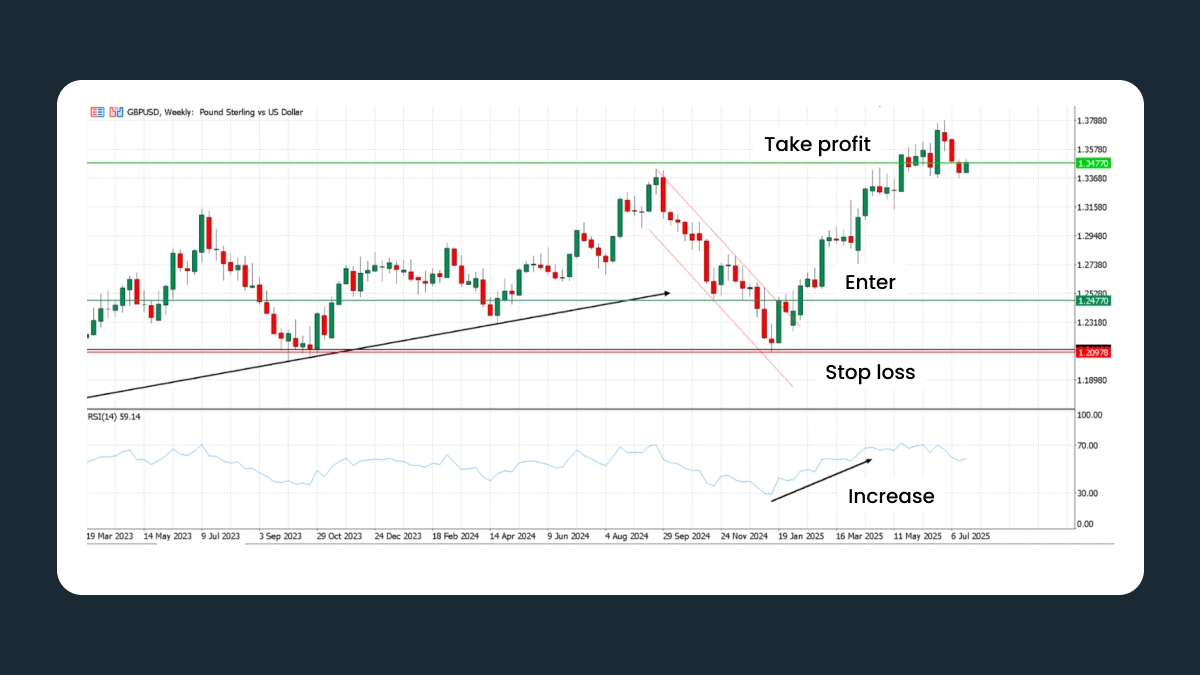
A trader sees a bullish flag on EURUSD near the 1.21178 resistance level. Then the ECB gives some dovish signals, which support the trade idea. The trader enters at 1.2477 and exits at 1.3477, that’s a 1000-pip move. With just 0.5 lots on a $1000 account using 1:50 leverage, the profit is $500.

But the same setup could have played out very differently. Suppose the ECB’s dovish signals were already priced in, and instead of breaking higher, the EURUSD reversed sharply from the 1.2477 entry point. With a stop-loss placed 50 pips lower, the trade would have been closed automatically at a $250 loss (0.5 lots = $10 per pip). On a $1000 account, that’s a 25% drawdown — a sharp reminder of how leverage magnifies both gains and losses. Without a stop, the position could have kept bleeding, wiping out most or all of the account.

With good timing and smart risk control, even small accounts can make real money with FBS (no big investment needed)!

Which currency pairs to trade?

Which currency pairs to trade?

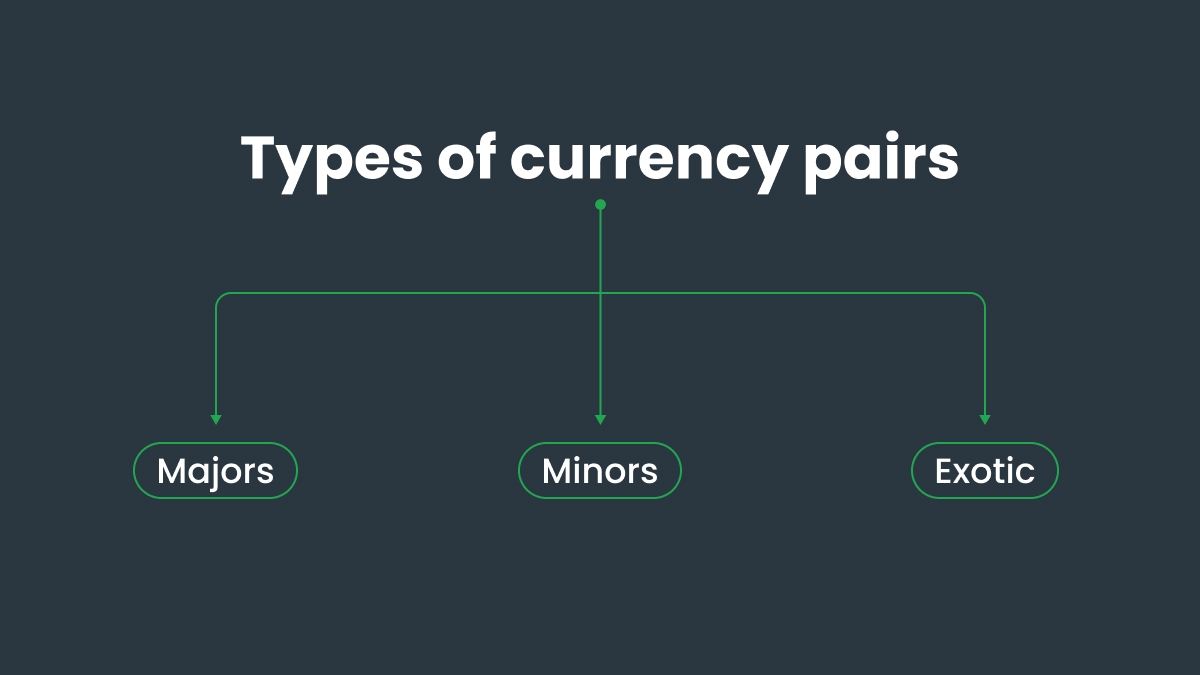
Forex pairs aren’t all the same. To make things easier to understand, traders usually put them into three main categories.

Majors

These are USD pairs with the EUR, GPB, and JPY. Since they are traded the most, they usually have the lowest spreads and the most liquidity. That’s a big reason why beginners often start here.

Minors

Minors don’t involve the dollar, but they still use major currencies. Think of pairs like EURGBP or AUDJPY. There’s still plenty of volume in these, but spreads are usually a bit wider compared to majors. They can still offer good trading setups.

Exotics

These combine a major currency with one from a smaller or emerging economy. USDTRY and EURSEK are two examples. Exotic pairs can move fast and be hard to predict. They also tend to have higher spreads, and there may be more risk involved.

It’s also worth paying attention to the time of day. Pairs like JPY and AUD are more active during the Asian session. EUR and GBP pairs usually pick up during the European hours. Most traders start with the majors to keep things simple. Later on, once they’ve gained some wins, they switch it up with some minor pairs.

Risk management: balancing benefits and risks

Forex can be a great way to make money if you manage your risk the right way. Before entering a trade, always decide how much you're willing to lose. Use a stop-loss every time, and make sure the trade is worth it.

Don’t risk too much. Just 1% to 2% of your account per trade is enough. Be careful when the market is quiet (like late on Fridays or after the Asian session). And don’t let emotions take over. High leverage can lead to big losses if you’re not careful.

It’s also important to be careful with leverage: always check what your regional rules are. How much leverage you can use depends on where your broker is regulated:

  • In the EU or UK, retail traders can only use up to 1:30 leverage.

  • In the US, the limit is 1:50.

  • Some offshore brokers let you use very high leverage, like 1:500 or even 1:1000, but that comes with huge risk — a small price move can wipe out your account.

Forex gives you the tools, but it’s your discipline that makes the difference. It’s a long journey, not a quick win.

Tools and education to help you trade

Trading platforms today offer much more than just a place to buy or sell. On FBS, for example, you can set alerts when the price reaches important levels, add indicators like moving averages or RSI to support your analysis, and follow market news inside the platform so you don’t miss events that move prices. The platform also shares signals and sentiment data, giving you an idea of how other traders are positioning.

If you’re new, don’t rush into live trades. Open a demo account first — it’s risk-free and lets you see how orders work in practice. Then move through the basics with tutorials. FBS Academy covers everything from key terms to strategy examples, so you can build skills gradually.

Your next step in Forex trading

Forex isn’t just easy to access, it’s also the most flexible market in the world. It fits your style, your time, and your trading plan. And you can trade from anywhere, anytime.

If you want low costs, big opportunities, and a market that follows global trends, Forex brings it all together. Choose FBS and start trading with more freedom and confidence.

Share with friends:

FBS at social media

iconhover iconiconhover iconiconhover iconiconhover icon

Contact us

iconhover iconiconhover iconiconhover iconiconhover icon
store iconstore icon
Get on the
Google Play
store iconstore icon
Get MT4 on the
App Store
store iconstore icon
Get MT5 on the
App Store

Trading

Company

About FBS

Our social impact

Legal documents

Company news

FC Leicester City

Help Center

Partnership programs